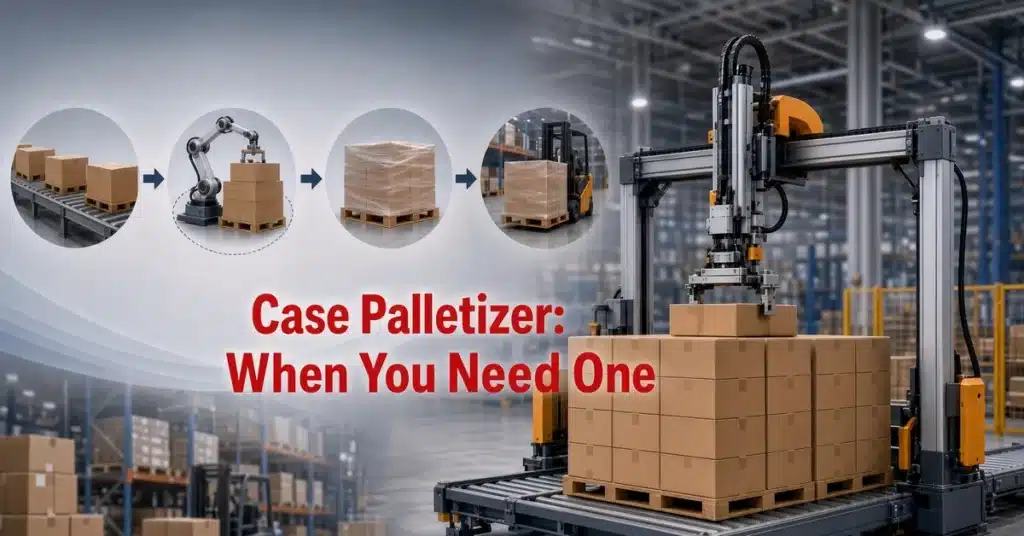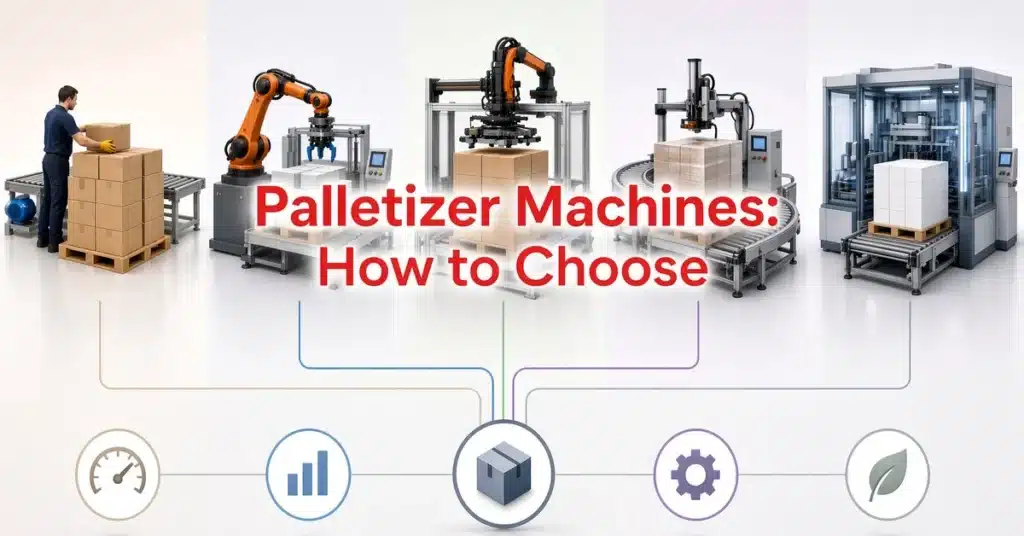
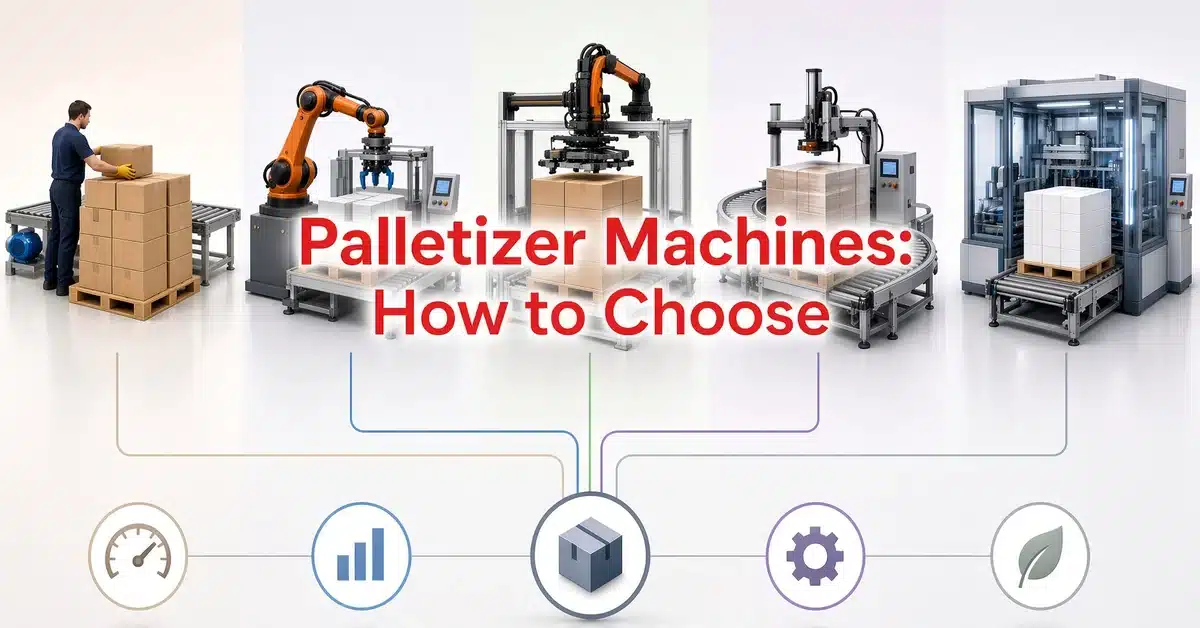
A palletizer machine automates stacking cases, bags, or other product onto a pallet. Palletizer machines range from simple mechanical stackers to fully robotic cells. The right one depends less on brand than on your product, volume, and floor space. Choosing among the different palletizer machines starts with knowing which category actually fits your operation.
On This Page:
Conventional vs. Robotic Palletizers
The first fork in the road is conventional versus robotic. Conventional palletizers use mechanical arms, pushers, or layer-forming tables built for one repeated motion. The Packaging Machinery Manufacturers Institute tracks this equipment category closely, since palletizers sit at the end of most packaging lines. They handle high, steady volume well and typically cost less upfront. Robotic palletizers use a multi-axis arm that can adapt to different products and patterns without a hardware changeover.
Neither type is universally better. A single-SKU, high-speed line often runs fine on a conventional machine for years. A facility with frequent product changes usually gets more value from a robotic cell’s flexibility.
Palletizer Types by Product Handled
Palletizer machines also split by what they handle. Case palletizers stack cartons and boxes, and they are the most common type across food, beverage, and consumer goods. Bag palletizers handle powders, feed, and other bagged bulk product, often with different end-of-arm tooling than a case machine uses. Layer palletizers build a full layer at once rather than picking individual cases, which suits high-speed single-SKU lines. Mixed-load palletizers handle multiple SKUs on one pallet, a harder problem that usually points toward a robotic solution.
- Case palletizers: cartons and boxes, the most common type
- Bag palletizers: powders, feed, and bulk bagged product
- Layer palletizers: full-layer forming for high-speed single-SKU lines
- Mixed-load palletizers: multiple SKUs on one pallet
Palletizer Types by Loading Style
A second way to sort palletizer machines is by how the product enters the cell. Low-level palletizers receive product at floor height, which keeps the footprint compact and skips the need for platforms or catwalks. High-level palletizers receive product above the pallet and build downward, which usually supports higher speeds. In-line palletizers move product in a straight path through the cell. Rotary palletizers turn product through an arc, which can pack more stations into a tighter footprint.
None of these loading styles is automatically correct. The right choice depends on your existing conveyor layout as much as the palletizer itself.
How to Choose the Right Palletizer
A few factors decide which palletizer machine actually fits. Volume determines whether a simple conventional unit keeps up or whether you need a faster or more flexible system. Product mix determines whether a single-purpose machine works or whether you need robotic flexibility. Floor space and ceiling height rule some options out before cost ever enters the conversation. Budget matters, but it should come after the first three factors, not before them. MHI publishes a similar framework for evaluating palletizing systems and suppliers.
“People often start by asking what a palletizer costs. That’s the wrong first question. Start with your product and your volume, and the right category of machine usually becomes obvious before price ever comes up. Skipping that step is how operations end up with equipment that never quite fits.”
Where Robotic Palletizers Fit In
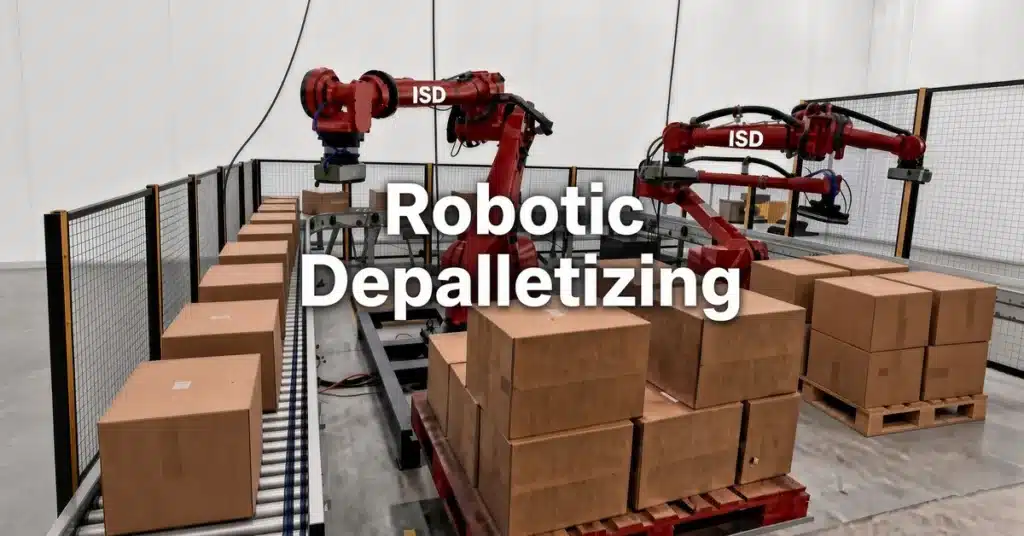
Most of the manufacturers selling palletizer machines only sell their own equipment. ISD does not build palletizers. We evaluate collaborative, industrial, SCARA, and gantry robotic platforms, along with conventional alternatives. We recommend the combination that fits your product.
“We’re not trying to sell you a specific machine. We’re trying to solve a palletizing problem, and sometimes that means a robot, and sometimes it means a simpler conventional unit does the job for less money.”
A robotic palletizer might be the right fit for your line. Our Palletizing Module page covers how ISD approaches that technology. Our robot and tooling guide covers how we match equipment to product.
“Buying a palletizer machine off a spec sheet and hiring someone to design the right system around your product are two different projects. Most operations need the second one, even if they start out looking for the first. The spec sheet rarely tells you which one you actually need.”
Our readiness guide is a good next step. So is our end-of-line automation guide, once you know which category of palletizer fits your operation. If cartons and boxes are your primary product, our case palletizer guide covers that category specifically.
Frequently Asked Questions
What is the difference between a conventional and a robotic palletizer machine?
Conventional palletizers use mechanical arms or layer tables built for one repeated motion. Robotic palletizers use a multi-axis arm that adapts to different products and patterns without a hardware changeover.
What type of palletizer is best for cases and cartons?
A case palletizer is purpose-built for cartons and boxes. Whether a conventional or robotic version fits your line depends on your volume and product mix.
Should I buy a palletizer machine directly from a manufacturer or work with an integrator?
It depends on your project. A single, well-defined machine purchase can work directly with a manufacturer. A full system that fits your existing line usually benefits from an integrator with no single-brand allegiance.
How much does a palletizer machine cost?
Cost varies widely by type, speed, and flexibility. ISD recommends starting with your product and volume requirements before comparing pricing across categories.
Can one palletizer machine handle multiple product types?
Some can, particularly robotic and mixed-load systems with the right tooling and vision. Conventional single-purpose machines are more limited.
About ISD
ISD is a systems integrator specializing in warehouse, distribution, and manufacturing operations. ISD is also an OEM provider of the UltraStore Mid-Load ASRS system. ISD’s proprietary OptimalOps-Process uses an 8-step framework to improve operational efficiency and reduce costs. It also speeds up ROI across picking, sorting, packing, and shipping.
ISD works closely with clients to define objectives, analyze data, and build tailored solutions. We do not sell one palletizer brand and call it a fit for every operation. Our offerings span conveyor systems, ASRS, AMRs, robotics, sortation, warehouse software, pallet handling, and order fulfillment technologies. Learn more at www.isddd.com.
Ready to Find Out Which Palletizer Machine Fits Your Operation?
Schedule a consultation with ISD, or see the full Palletizing Module page to learn more about robotic options.