Your operation is ready for palletizing automation when your team is manually stacking or unstacking pallets. That’s especially true if the pace outruns your labor, your safety record, or your floor space. If that sounds familiar, it’s worth a closer look before you write off automation as something for “bigger” operations.
On This Page:
Signs You’re a Good Candidate
A few signs point toward a strong fit for robotic palletizing or de-palletizing:
- Workers manually building or breaking down more than a handful of pallets per shift
- Overtime or temp labor regularly covering end-of-line or receiving positions
- Recordable injuries tied to lifting, twisting, or repetitive case handling
- Pallet patterns that are consistent enough for a robot to learn, even if there are a few SKU variations
- A conveyor line already in place, or planned, that a robotic cell could tie into
- Seasonal volume swings that make hiring and training temp labor a yearly headache
None of these alone means you need automation tomorrow. Together, they’re a pattern worth a real conversation. If several of these sound like your operation, you’re likely ready for palletizing automation sooner than you think.
Signs You Might Want to Wait, or Prep First
A few situations point toward waiting, or at least doing more homework first:
- Product changes so often that no two pallets look alike
- Volume is low enough that a robot would sit idle most of the shift
- You haven’t yet mapped your current cycle rate or labor cost per pallet
- The floor space or conveyor infrastructure isn’t in place yet to support a cell
None of these rule automation out forever. They just mean the timing, or the prep work, isn’t there yet.
What ISD Looks at During a Consultation
When ISD evaluates a palletizing or de-palletizing application, we start with your actual product, not a generic spec sheet. That means product dimensions and weight, current pallet patterns, and target cycle rate. It also means how the cell would tie into your existing conveyor or production line.
“The operations that are ready for a palletizing module usually already know their numbers. They can tell us their current cycle rate, their labor cost per pallet, and where their injury reports are coming from. That data turns a guessing exercise into a design exercise, and it’s usually the difference between a fast, accurate quote and a lot of back-and-forth before we even get to a proposal.”
We also look at the environment. Cold storage, washdown, and dusty or high-heat environments all change the robot, tooling, and guarding recommendation. The Material Handling Institute notes that environment and product variability are both commonly underestimated in early planning.
The Cost of Waiting
Waiting has a cost too, even if it doesn’t show up on a single line item. Every quarter spent on manual palletizing is another quarter of overtime and another round of seasonal hiring. It’s also another set of injury reports tied to repetitive lifting. None of that shows up as a dramatic failure. It shows up as a slow, steady drag on margins and on your team.
That doesn’t mean automation is always the answer right now. It means the cost of the status quo deserves the same scrutiny as the cost of a new system. Palletizing automation earns its keep when that comparison actually gets made.
“Operators rarely calculate what manual palletizing is actually costing them; they only calculate what automation would cost. Both sides of that comparison matter, and most operations are surprised by the manual side once they actually add up overtime, turnover, and injury claims across a full year instead of just one bad month.”
Where to Go Next
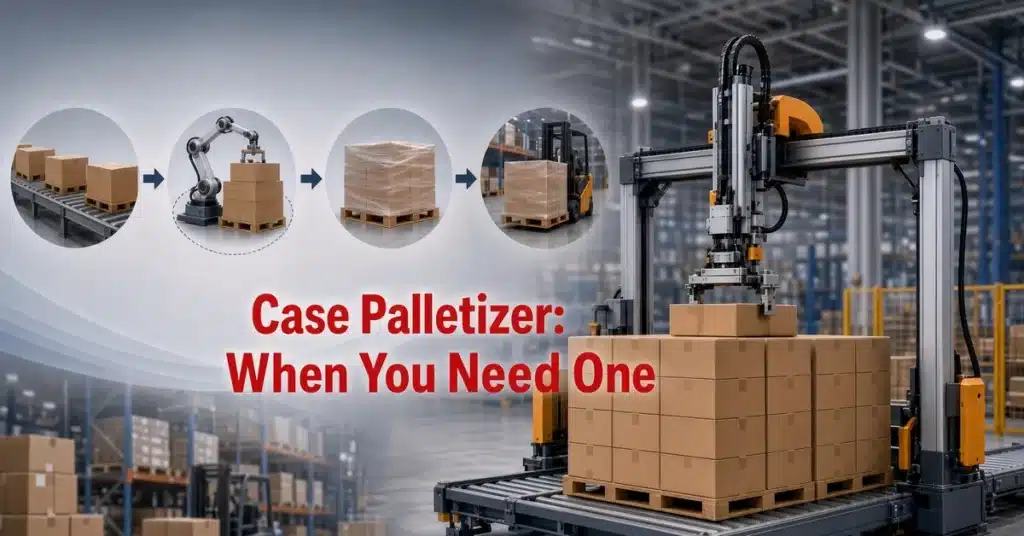
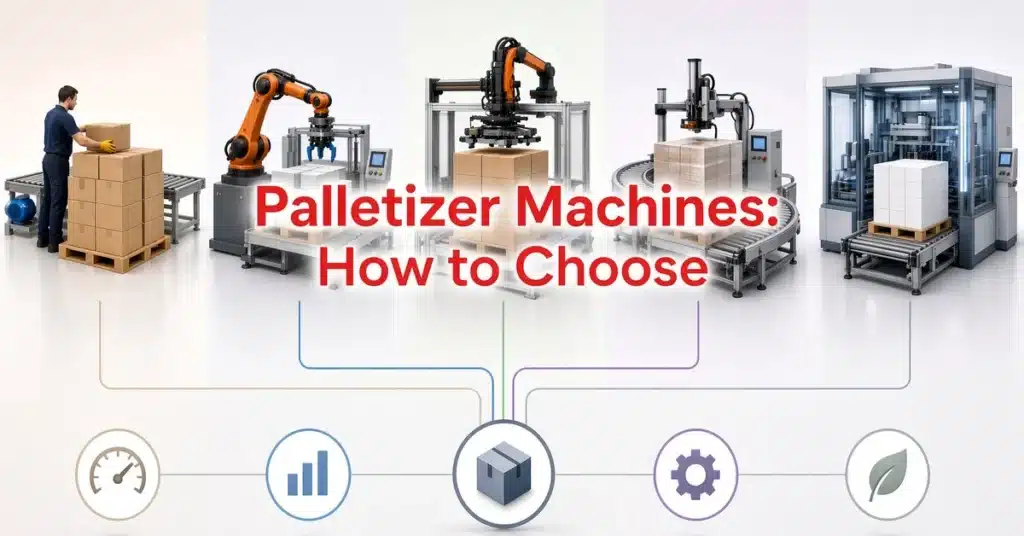
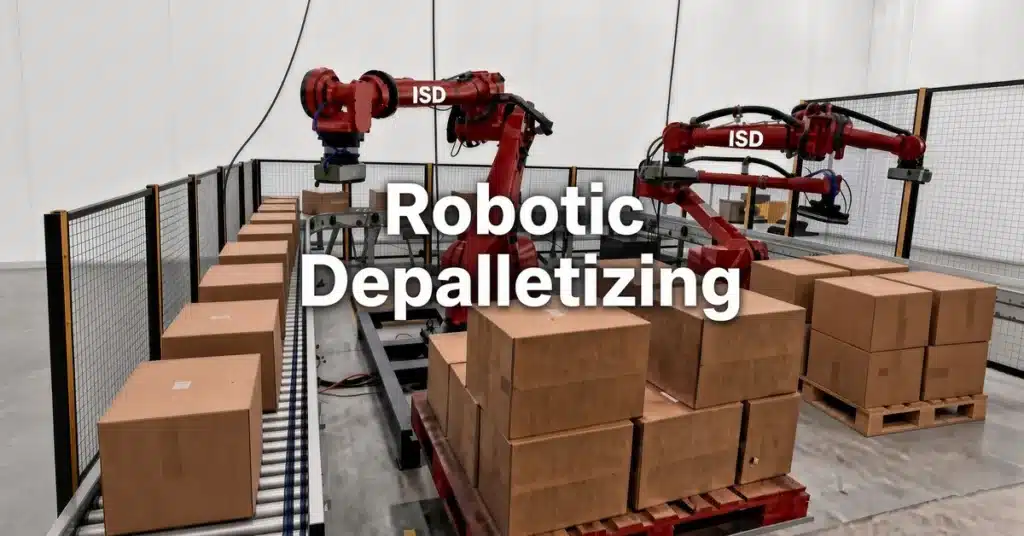
Still not sure whether you’re ready for palletizing automation? Start with our Palletizing Module page for how the technology works. Our robot and tooling guide covers how ISD matches equipment to product, and our depalletizing guide covers the reverse process. If you want a fast first read before a consultation, our Is This a Good Palletizing Application? checklist is built for that. Our end-of-line automation guide covers what surrounds the robot itself. The types of palletizer machines guide compares equipment at a broader level. For cartons and boxes specifically, see our case palletizer guide.
Frequently Asked Questions
How do I know if my operation is a good fit for robotic palletizing?
Look at your manual palletizing volume, your injury and overtime trends, and whether your pallet patterns are consistent. If several of those line up, it’s worth a consultation.
What if my product mix changes frequently?
Mixed-SKU applications are common and often still automatable with vision-guided pattern building. The right fit depends on how much variation you’re dealing with, which ISD works through during a consultation.
Do I need to have my conveyor system finalized before talking to ISD?
No. ISD often designs the palletizing cell and the surrounding conveyor integration together, especially for new lines or major retrofits.
What information should I bring to a first conversation?
Product samples or dimensions, current pallet patterns, and target cycle rate all help. So does any known constraint on floor space or environment, since it helps ISD scope the right system faster.
About ISD
ISD is a systems integrator specializing in warehouse, distribution, and manufacturing operations. ISD is also an OEM provider of the UltraStore Mid-Load ASRS system. ISD’s proprietary OptimalOps-Process uses an 8-step framework to improve operational efficiency and reduce costs. It also speeds up ROI across picking, sorting, packing, and shipping.
ISD works closely with clients to define objectives, analyze data, and build tailored solutions. Our offerings span conveyor systems, ASRS, AMRs, robotics, sortation, warehouse software, pallet handling, and packaging and fulfillment technologies. Learn more at www.isddd.com.
Ready to Find Out If a Palletizing Module Fits Your Operation?
Schedule a consultation with ISD, or explore the Palletizing Module page for a full look at the technology.