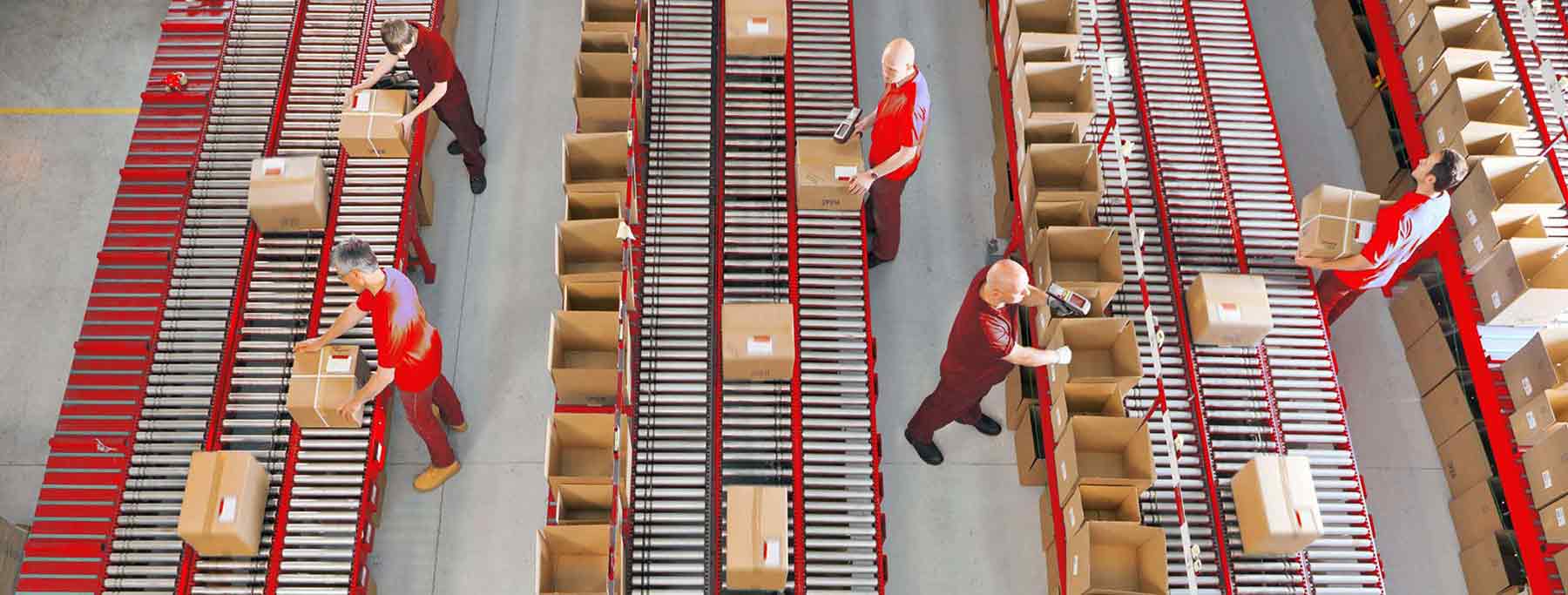
Near where he lives in densely populated New Jersey, Kevin Lawton sees the same thing everywhere he goes: distribution centers with “We’re Hiring” signs permanently set out front.
“It’s an extremely competitive labor market,” explains Kevin, who has spent 13 years in warehousing and now hosts The New Warehouse podcast. “Especially for small and mid-market operations when larger companies can pay higher wages. I’ve seen warehouse workers jump ship for 50 cents more an hour.”
Data confirms his experience. A Harvard Business Review survey of 2,000 supply chain executives found that 57 percent ranked hiring and retaining warehouse labor as their biggest challenge.
To compete in this labor shortage, warehouse leaders need more than higher wages. They need better jobs and more resilient warehouse operations. When applied correctly, warehouse automation solutions can help improve safety, stabilize labor needs, and support long-term performance across different types of warehouse environments.
In This Article
- The 4 Facets of the Warehouse Labor Challenge
- Meeting High Wages
- Creating Safer Jobs
- Motivating Warehouse Workers
- Reducing Labor Needs
- 3 Tips for Maximizing the Impact of Warehouse Automation
The 4 Facets of the Warehouse Labor Challenge
1) Meeting High Wages
In 2018, Kevin was running a manufacturing and distribution operation and paying .50 per hour, which was competitive at the time. “By the end of the pandemic, we were offering $20 per hour just to get new hires in the door.”
That trend continues across the supply chain. Rising labor costs have become a constant pressure on warehouse operations, especially for businesses managing tight margins.
Even with higher pay, hiring remains difficult. Kevin recalls peak seasons where 1,800 temporary workers were available. Recently, only about 800 showed interest. Workers want safer conditions and more sustainable work in the warehouse, not just higher hourly rates.
2) Creating Safer Jobs
Warehouse jobs cannot be done remotely, but technology can make them safer and more sustainable.
Studies of large distribution centers have shown injury rates far above average, often tied to repetitive motion, heavy lifting, and reliance on temporary labor. These risks increase when manual processes dominate warehouse space.
Warehouse automation helps reduce these risks. Improvements range from better handheld interfaces to automated storage and retrieval systems that improve inventory control and reduce travel time.
“Someone unloading containers by hand isn’t going to stay long term,” Kevin says. “Taking away the dull, dirty, and dangerous work helps retention.”
Safer jobs also support stronger inventory management and more consistent order fulfillment by keeping experienced workers in place.
3) Motivating Warehouse Workers
Technology improves efficiency and accuracy, but it also affects morale.
“If an app on your phone isn’t user-friendly, you delete it,” Kevin explains. “Warehouse management systems should be no different.”
Modern warehouse management systems guide workers through order processes with clear instructions, touch screens, and real-time feedback. This reduces training time, lowers error rates, and helps warehouse workers feel more confident in their roles.
When systems support workers instead of slowing them down, productivity improves and turnover drops.
4) Reducing Labor Needs
Making warehouse jobs better helps address the labor shortage, but it does not eliminate it. There simply are not enough workers available to meet demand across the supply chain.
Warehouse automation helps fill the gap with targeted investments, including:
- Automating warehouse jobs that see the most employee turnover
- Adding technology in specific parts of time-consuming manual processes, like ASRS for unloading and storing goods or automated packaging machines for labeling and taping shipments
These automated solutions reduce dependence on manual labor while improving inventory control, packing and shipping accuracy, and overall warehouse operations.
3 Tips for Maximizing the Impact of Warehouse Automation
1) Don’t Chase the Shiny Object
Robotics often get the spotlight, but automating inefficient workflows limits ROI.
“If you automate a process that isn’t optimized, you’re just making the bad parts faster,” Kevin says.
Before investing in automated warehousing, evaluate:
- Warehouse space constraints
- Inventory flow and order fulfillment patterns
- Bottlenecks caused by manual processes
Foundational improvements such as conveyors, layout changes, or software upgrades often deliver faster results than complex systems.
2) Listen to Your Team
Data should guide automation decisions, but worker input explains why problems exist.
Review metrics like:
- Pick velocity and congestion points
- Order fulfillment speed by shift
- Productivity changes over time
Then talk to warehouse workers directly. Ask where fatigue sets in, which tasks slow them down, and which processes feel unnecessary.
In one example, Kevin describes workers pushing heavy pick carts for seven-hour shifts. Data showed productivity drop-offs late in the shift. An autonomous mobile robot became a better solution than adding labor.
3) Look Beyond Picking
Picking often receives the most attention, but other areas offer major opportunity.
Trailer loading and unloading exposes workers to extreme temperatures and physical strain. Automating these tasks improves safety while reducing labor costs.
The most effective warehouse automation strategies improve jobs across receiving, inventory management, order fulfillment, and shipping, not just picking.
Embracing Automation for the Long Term
Across the globe, labor shortages are affecting warehouse operations. Smaller generations and competition from other industries continue to shrink the workforce.
Automation does not eliminate warehouse jobs. It reshapes them. By reducing manual labor, improving inventory control, and supporting safer work, automated solutions help warehouses operate more reliably over the long term.
There is no single warehouse automation solution that fits every operation. The right approach depends on warehouse space, order processes, and workforce realities.
ISD partners with warehouses to design automation that makes sense today and supports sustainable growth.
Ready to get started? Reach out for a free consultation.