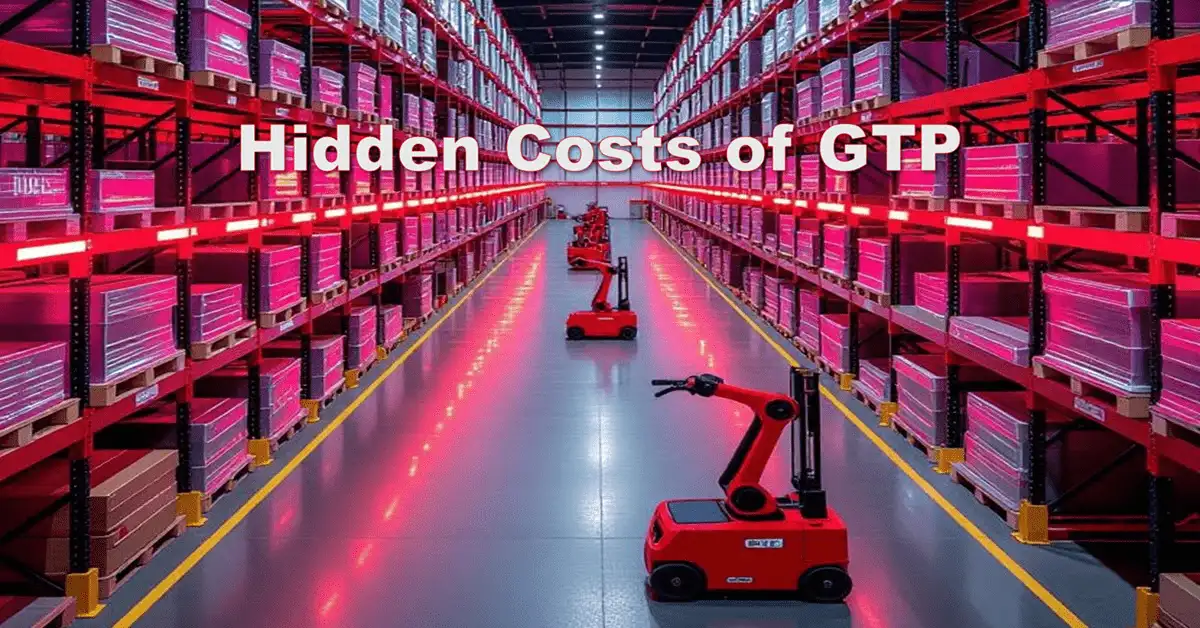
A goods to person system has changed how warehouse operations work. These systems are very helpful for split-case order picking. When they work right, they deliver great results. You can reduce labor costs, use your building better, and improve accuracy. The marketing for these tools is great, and the ROI looks good on paper.
However, the real world is more complex. Many companies find hidden automation costs and hurdles only after they buy a system.
“After implementing hundreds of warehouse automation projects, we’ve seen too many companies get caught up in the initial excitement of GTP technology and not the Hidden Costs of Goods-to-Person Systems and without fully understanding the total cost of ownership. The most successful implementations happen when decision-makers look beyond the marketing materials and honestly assess whether the technology aligns with their specific operational requirements and long-term business strategy,” says Bob Jones, a Senior Consultant with ISD.
Before you pay the gtp implementation fees, look at these twelve critical factors.
1. Physical Constraints and Tote Sizes
Every gtp system costs more if your products do not fit. There are strict physical limits set by the tote sizes and the system design. If your items do not fit, they cannot be automated. This has a big impact on your business case.
Items that do not fit in the goods to person robots need a separate process. This affects your labor, space, and warehouse management systems wms. If orders arrive at the dock at different times, it can create chaos. This leads to higher costs and missed shipping deadlines.
2. Case Picking Integration
Many facilities handle both case picking and each-picking. Coordinating these is a challenge. Even if a system can handle cases, the weight might force you to process them in different areas.
Traditional picking happens in waves. A gtp system usually runs without these stops. These different rhythms can hurt your efficiency.
Consider this: a customer orders 28 items. Ten come from the GTP system, and 18 cases come from a separate picking system. How do you bring these together quickly? If you need to sequence orders, the asrs total cost of ownership goes up fast.
3. Product Weight Limits
Vendors often talk about volume, but weight is just as important. Most goods to person robots have a 50-pound limit. If your products are heavy, you might reach the weight limit before the tote is full. This wastes space and may require you to buy a larger system than you planned.
4. Tote Subdivisions and Small Items
Small, slow-moving items have their own problems. If a product only takes up a tiny bit of space, the rest of the tote is wasted unless you divide it.
Most systems allow up to eight cells per tote. However, height limits mean you still might not use all the space. Also, if one cell is empty, the whole tote often must go back to storage to be refilled. This adds more work for the robots. Mixing fast and slow items in one tote can lead to delays and complex inventory management.
5. Managing Order Flow
Product flow gets a lot of attention, but order flow is just as vital. If orders do not move through at the right speed, you will miss your targets.
If you need to hit 350 lines per hour per picker, you must process an order every 5.8 seconds. If you cannot hit this pace, you will need more pickers and more stations. This hurts your projected cost savings. Analyze your order profile carefully before the initial investments are made.
6. Maintaining Product Flow Consistency
Totes must arrive at the picking station in the right order and at the right time. Some systems are better at storage density, while others are better at quick retrieval. If you have a short order queue, prioritize consistency. If you have more time, you can focus on density.
7. Seasonal Scalability
Vendors say you can just add more goods to person robots for peak seasons. However, you cannot easily add new pick stations. Scalability and flexibility require more than just robots. You need the physical space and stations to handle the extra volume. You must also scale your replenishment area to avoid bottlenecks.
8. Vertical Space Utilization
Some systems are better at using high ceilings than others. Maximizing your building height can reduce your footprint and the number of robots needed. Systems that use full-height racking often have a lower asrs total cost of ownership because they save on floor space.
9. Floor Specifications and Remediation
Robots need flat, smooth floors. Some systems are very sensitive to floor conditions. Fixing a floor can be very expensive and take a long time. Always get a floor survey before you start. These hidden costs can ruin a budget.
10. System Placement and Workflow
Most GTP systems keep totes in a core area. You must place the system near your docks and packing areas. If the system is far away, you will spend more on equipment and labor to move goods across the building.
11. Fire Suppression and Compliance
Dense storage and plastic totes create fire risks. Local fire marshals or insurers may require expensive sprinkler upgrades. Never assume your existing warehouse management systems or safety tools are enough. Check with fire authorities early to avoid a high implementation cost.
12. WMS and WES Software Integration
Integration is the biggest factor for success. Without a strong warehouse management system wms and a warehouse execution system, the hardware will fail.
Traditional software is often too slow for the real-time needs of automation. You may need a dedicated system to manage the goods to person robots. Every movement needs a software rule. If the data is wrong, the whole operation stops. Successful integration requires perfect data on item size, weight, and velocity.
Making Informed Decisions
GTP systems offer great benefits, but they are not for every building. You must look at the asrs total cost of ownership and the impact on your supply chain.
Before you commit to the initial costs, do a deep study. Involve your IT, safety, and finance teams. Fixing a problem after the system is built costs much more than planning for it at the start.
At ISD, we don’t just sell technology – we partner with you to clearly define your objectives, analyze data, and create tailored solutions that align with your business KPIs and business goals. From conveyors, robotics, ASRS, AMRs, sortation, order fulfillment, and packaging automation, we provide the tools and expertise to maximize ROI and future-proof your operations.
I welcome your questions. For more information, visit our website or schedule a no-obligation consult to discuss your specific needs and the gtp system costs.