When you hear “warehouse automation,” what do you think?
A team of robots zooming around inventory lanes?
A bank of monitors blinking with red, yellow, and green indicators?
A big check?
For many warehouse and distribution operations, automation still feels abstract or intimidating. Many teams are early in their automation journey and lack hands-on experience. Even operations with some automation in place often wonder whether they are leaving value on the table or missing opportunities to expand what they already have.
For this guide, we spoke with two operations experts who have spent decades running and improving hundreds of warehouses. We asked them what companies think warehouse automation is and what it actually is in practice.
- After reviewing these ten common misconceptions, you will be better equipped to:
- Understand what warehouse automation looks like in real-world operations
- Identify which types of automation make sense for your facility
- Avoid investing in technology that does not solve your core operational problems
- Confidently answer executive-level questions about automation strategy and ROI
And if at the end, you’re still curious to understand more about automation, ISD’s automation experts are here to answer questions and help you make the shift that’s right for you.
What Automation Isn’t: Common Misconceptions
1. Automation isn’t: A one-size-fits-all solution.
2. Automation isn’t: A miracle worker.
3. Automation isn’t: Independent.
4. Automation isn’t: Only about big-ticket machinery.
6. Automation isn’t: Bad for jobs.
8. Automation isn’t: Expensive.
9. Automation isn’t: Something you have to manage alone.
10. Automation isn’t: The answer.
1. Automation isn’t: A one-size-fits-all solution.
It is tempting to believe that a single system or platform can solve every warehouse automation challenge. The idea of purchasing a ready-made solution that immediately fixes inefficiencies is appealing.
In reality, successful warehouse automation systems are tailored to the operation. Solutions that promise to do everything often fail to deliver meaningful long-term results.
Tony Morgott, ISD’s VP of Sales, explains it this way:
“There are hundreds of manufacturers out there, and nobody does everything extremely well. Trying to buy from a single vendor can be like forcing a square peg into the wrong hole. At ISD, we bring a network of trusted partners so we can reduce risk and design solutions that actually fit the operation.”
Every warehouse is different. Your automation strategy should reflect that.
2. Automation isn’t: A miracle worker.
Bob Jones has been in operations for more years than he’s willing to admit. Initially, he was an ISD customer before using his expertise internally. He has witnessed numerous automation projects succeed, but he’s also observed many that didn’t.
His experience has shown him that automation can’t fix everything.
“The quickest way to close a company and shutter it permanently? Think that automation will handle everything.”
For example, a warehouse that’s stocking too many products needs to right-size its procurement process and improve its inventory before it can realize maximum benefit from an automatic storage and retrieval (ASRS) system.
Another example? When automation is implemented as an island within an operation. In cases where the WMS functionality, upstream operations (receiving, replenishment), and downstream operations (picking, packing, consolidating) have not been restructured and improved to integrate with automation, your operation is slowed, not improved.
That’s why ISD starts all projects with an assessment of what’s going on at your company. If you’d like to talk to an automation expert about your warehouse’s specific situation, schedule a free consultation today. If automation’s not the best investment for your warehouse right now, we’ll tell you. If it is, we’ll guide you through every step.
3. Automation isn’t: Independent
In some operations, everything happens in idiosyncratic ways. Before automation can be implemented, processes need to be streamlined — and rules followed.
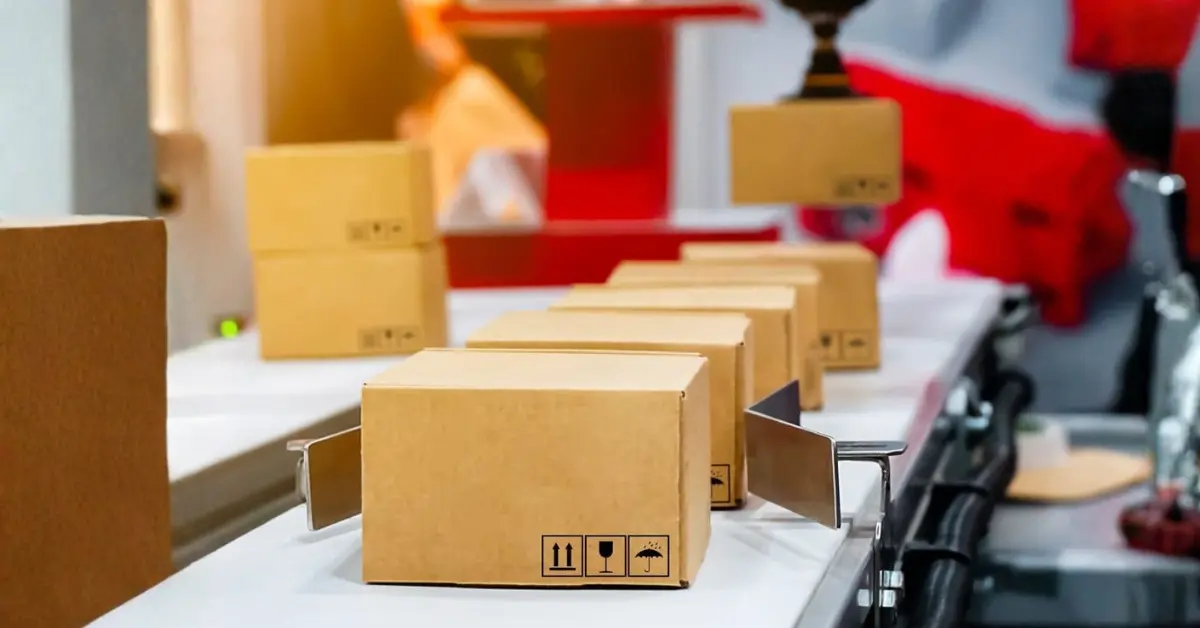
Let’s say in your distribution center, every order slip is tagged to the same packaging: a simple brown box. When orders contain only small, delicate products, packers review the order slip and decide to pack the order in a protective bubble envelope instead.
An automated packing system can’t make that same calculation on its own.
“The golden rule is the more you automate, the more rigid the rules become,” explains Bob. “The tribal knowledge within a warehouse means nothing to automation or to process requirements.” Automation doesn’t “see” or consider things that are defined systematically.
When designing an automated process, remember you’re not designing automation itself. You’re designing a workflow. It’s much less about robots and much more about specifying inputs, decision trees, and detailed information on products, processes, procedures, and shipping requirements.
Automation isn’t independent. But that means that automation is less overwhelming than you may have anticipated. It starts with externalizing all the decisions you and your team know you need to make and making them repeatable.
4. Automation isn’t: Only about big-ticket machinery.
How you install your automation equipment matters just as much as what you buy.
“Think about when someone builds you a house. They can use the greatest shingles, siding, and windows possible. But if they do a garbage job installing it, leaks will come through everywhere because they didn’t put it together right,” says Tony. “The way you put everything together is as important or more important than the components themselves.”
ISD works with a wide range of products and a suite of hardware and software providers, so you’re always getting the right technology and operational experts who know how to maximize it for your warehouse. Talk to us today about how we can become your trusted partner in managing automation.
5. Automation isn’t: Smart.
It might not be what you expected, but automation really isn’t smart.
You, as a warehouse manager with lots of experience, are a much nimbler, more creative problem solver than an algorithm could be.
You and your top performers know how to solve problems in real time, taking in unexpected inputs and juggling multiple pressures.
“Automation is very efficient, but it’s very transactional,” says Bob. “Operators can manipulate, can think. Machines can just do, unless the logic for exceptions is built into the automated workflow and the automation can ‘trap’ exceptions it cannot work though.”
Understanding this helps determine where it makes sense to invest in automation. In an area with repetitive processes that can be managed with external logic? Automation all the way. A process that requires lots of discretion? Stick with your team for now.
For more guidance on where automation makes the most sense, download our free guide Getting Started with Warehouse Automation.
6. Automation isn’t: Bad for jobs.
There’s a belief that automation can be bad for jobs.
What it does is make jobs better.
“A manual environment is fraught with tribal knowledge. Someone new comes in and has to learn how to hand-pick 50,000 SKUs in 2.5 hours, at the required speed and efficiency? That’s a bad experience for them and ultimately, for your customers,” explains Bob.
An automated system, on the other hand, makes it easier to come in and come up the curve, as the process is truly more transactional. It improves working conditions, so workers no longer have to run around a hot warehouse at risk of accidents with heavy machinery; instead, they work in a comfortable environment where orders and products arrive safely. And it allows you to compensate them more, which in turn supports their families, futures, and sense of fulfillment at work, minimizing transient labor and the exorbitant costs of churning employees through your operation.
Automation may change your labor needs. For example, instead of needing 200 temporary workers to get orders out the door each day, you might need 50 well-trained permanent workers with safe jobs and pride in their work.
“I would rather have a smaller, better-paid workforce that is not as transient, every time,” says Bob.
Questions on what jobs look like post-automation? Ask our team.
7. Automation isn’t: Static.
The demands of a distribution center have grown significantly in recent years. It used to be enough to offer two-day delivery. Some customers, particularly those in urban areas, expect delivery within 24 hours, according to a 2023 McKinsey report. According to Amazon, 1.5 million people use same-day delivery each month.
As needs change, your warehouse needs to, too. Automation isn’t static, and that’s a good thing. It can grow and evolve with your business.
“Some warehouses are fully automated, but most aren’t,” explains Tony. He gives an example:
- In a site where there’s a lot of manual picking because there’s a wide range of products, automation might not yet be the right answer for all picking.
- “If you think about your hands and fingers, you know how to pick up an egg differently than a rubber ball. Getting that process into an automated picking system is not impossible, but it’s hard,” he says.
Instead of automating every part of the fulfillment process, start by identifying bottlenecks in your system and automating them. For example, if orders are accumulating and waiting to be packed and manifested, you could start by adding conveyors to move orders to packers or automated labelers to speed up shipping.
“People’s business needs change. If we start with doing one part of a process, we can expand it to take on an additional task when that’s ready,” says Tony. “In many operations, automation grows with time.”
8. Automation isn’t: Expensive.
You don’t need to invest in a complete system from the start.
There’s a common belief that to embrace automation, you need to embark on a greenfield project to build a brand-new site with state-of-the-art technology.
While you certainly can start with a blank block of space and build the perfect warehouse for you, that’s not the only way to automate.
And you don’t need to buy an entire suite of solutions from any one technology provider. When you do, you end up paying for features that aren’t relevant to your operation.
“If you don’t need it, why do you want to pay for it?” asks Tony. “For instance, you might need a cut-and-dry ASRS package that can be provided very affordably, but a bigger software company might charge 4x as much for it, plus $30,000/year in maintenance and support.”
ISD is product and brand-agnostic. We work with vendor partners to mix and match solutions and identify the right fit for your operation, so you’re never stuck with an expensive bill for technology you don’t need. We negotiate on your behalf, acting as another member of your team. Learn more about how we partner.
9. Automation isn’t: Something you have to manage alone.
Some vendors are interested in the sale. They want to get their products into your warehouse or installed on your systems, then move on to the next customer.
At ISD, we’re interested in partnership.
We believe in collaborative automation. We know you’re the experts on how your business runs today, and that our team of agile engineers can design how it could run tomorrow.
We start our partnerships long before a sale.
We start with research, observing your operation and asking questions to understand how it works.
Then we collaborate with you to identify areas for improvement and calculate a fast ROI.
We build customized solutions for your needs and budget.
We handle installation with the utmost trust and efficiency. Our team works year-round, including weekends and holidays, so you can get a new system up and running with minimal or no downtime.
Once your system is installed, we’re a phone call or message away for maintenance, troubleshooting, and updates on its performance.
Our job is to make your job easier, not just at the start of a new automation project but before, during, and long after it. To speak to an automation partner you can rely on, set up a free consultation.
10. Automation isn’t: The answer.
Instead, automation asks: Where do you want it to take you?
“If you buy a system and try to reverse engineer it to do what you do now, because it’s comfortable and what you know, you’ll never know everything it can achieve,” says Bob.
If you’re ready to see what automation can do for you, check out the 5 Questions to Ask Yourself Before Implementing Warehouse Automation.
And if you’re looking for a partner who can help you navigate automating your warehouse, schedule a talk with one of our experts today.