
Statistics for Holiday Shopping and Fulfillment
The holiday season has always been a proving ground for retailers and their supply chain partners, and the statistics for holiday shopping and fulfillment are proven. But in 2025, the rules of the game are shifting YET AGAIN. The National Retail Federation (NRF) projects holiday retail sales will grow between 2.7% and 3.7%, surpassing the $1 trillion mark for the first time. On the surface, that sounds like a milestone worth celebrating. But beneath the numbers lies a reality that demands sharper execution than ever.
With just 26 core shopping days between Black Friday and Christmas—the fewest in years—retailers face a compressed, cautious, and highly competitive shopping season. Consumers are shifting behaviors, budgets are tightening, and fulfillment operations will determine whether brands win or lose loyalty.
ISD 2025 Holiday Sentiment:
“The winners this holiday season won’t be the ones shouting the loudest. They’ll be the ones who fulfill the fastest, most accurately, and at the lowest cost. Operational excellence has become brand loyalty,” says Ed Romaine, VP of Marketing and Bus. Development of ISD – Integrated Systems Design.
Let’s break down the key consumer insights from Zeta’s 2025 Holiday Shopping Trends Report and explore how fulfillment operations can meet the challenge.
Consumer Spending: The Middle Matters Most
One of the most telling shifts this year is in consumer budgets. Shoppers planning to spend over $1,000 fell from 45% in 2024 to 33% in 2025. Instead, growth is concentrated in the $100–$500 range, while spending under $100 also ticked up.
| Holiday Spending Plans— | —2024—- | —2025— |
| Less than $100 | 12% | 18% |
| $100–$500 | 26% | 34% |
| $500–$1,000 | 17% | 15% |
| $1,000+ | 45% | 33% |
This is less a retreat than a reset. After an unusual spike in high-budget spending in 2024, consumers are normalizing and recalibrating what “worth it” means. For retailers, the implication is clear: value bundles, flexible payment options, and affordability are key to winning wallets.
And while cost matters, it’s not the only factor. Shoppers increasingly weigh total cart value, product availability, return policies, and shipping options when choosing a retailer.
2025 Statistics for Holiday Shopping and Fulfillment ISD’s Retail Reality:
“It’s not just about the sticker price. It’s about the total value experience—the right product, the right promise, fulfilled at the right time,” says Ed Romaine, VP of Marketing and Business Development at ISD – Integrated Systems Design.
When Consumers Shop: A Split Season
Another layer of complexity comes from timing. Shopping behaviors are diverging more than ever.
- 20% of consumers will start after Labor Day.
- Another 20% won’t begin until Cyber Week.
- The largest group, 29%, will wait until the final week before Christmas.
| Shopping Start Window | Percentage of Consumers |
| July–August | —-1% |
| September–October | ——16% |
| November (pre-Cyber Week) | —-19% |
| Black Friday–Cyber Week | —-20% |
| Early December | —-14% |
| Week Before Christmas | ——29% |
This split creates volatility. Fulfillment operations must be agile enough to handle early surges while preserving capacity for the last-minute scramble. Shipping cutoffs will creep up earlier, and in-store pickup, curbside, and same-day delivery will take on outsized importance.
“The holiday isn’t a single storm—it’s a series of waves. To survive, your operations need to flex with the tide, not fight against it,” says Ed Romaine, VP Marketing and Business Development at ISD – Integrated Systems Design.
The Decline of Mega-Sale Days
Black Friday and Cyber Monday still matter, but their dominance is fading. Only 34% of consumers find Black Friday compelling in 2025, compared to 52% just two years ago.
The implication is that retailers can’t rely on these events as “anchors.” Instead, they need to spread urgency across the season with rolling promotions, personalized offers, and last-minute incentives.
For warehouses and fulfillment centers, this means preparing for a steady drumbeat of orders rather than one or two tidal waves. The winners will be those who can flex throughput without driving up labor costs or sacrificing accuracy.
Statistics for Holiday Shopping and Fulfillment Fulfillment Pressure Points in 2025
With consumers cautious and retailers trimming inventory bets, fulfillment operations are under the microscope.
The statistics for the holiday shopping and fulfillment report highlight several key dynamics shaping fulfillment this year:
- Lean inventory: Retailers are limiting SKUs and relying on faster sell-through.
- Demand volatility: Shoppers are waiting for deeper discounts, compressing orders into shorter windows.
- Last-mile expectations: Same-day, BOPIS, curbside, and accurate shipping cutoffs are non-negotiable.
- Returns as a battleground: Faster, cheaper returns will separate leaders from laggards.
This means distribution centers must be sharper than ever. Picking errors, late shipments, or slow returns won’t just dent margins—they’ll cost retailers long-term customer trust.
At ISD, we call these the “holiday pressure points.” Each represents both a risk and an opportunity.
“Fulfillment excellence isn’t about throwing more people at the problem. It’s about building smarter systems that scale up and down with demand,” says Ed Romaine, VP Marketing and Business Development at ISD – Integrated Systems Design
How ISD’s OptimalOps-Process Helps Retailers Win
At Integrated Systems Design, we’ve developed the OptimalOps-Process, an eight-step framework designed to future-proof fulfillment operations. For holiday 2025, it addresses the exact challenges outlined above.
- Data-driven inventory control to balance lean stock with demand signals.
- Automated picking and sortation with robotics to speed throughput and reduce errors.
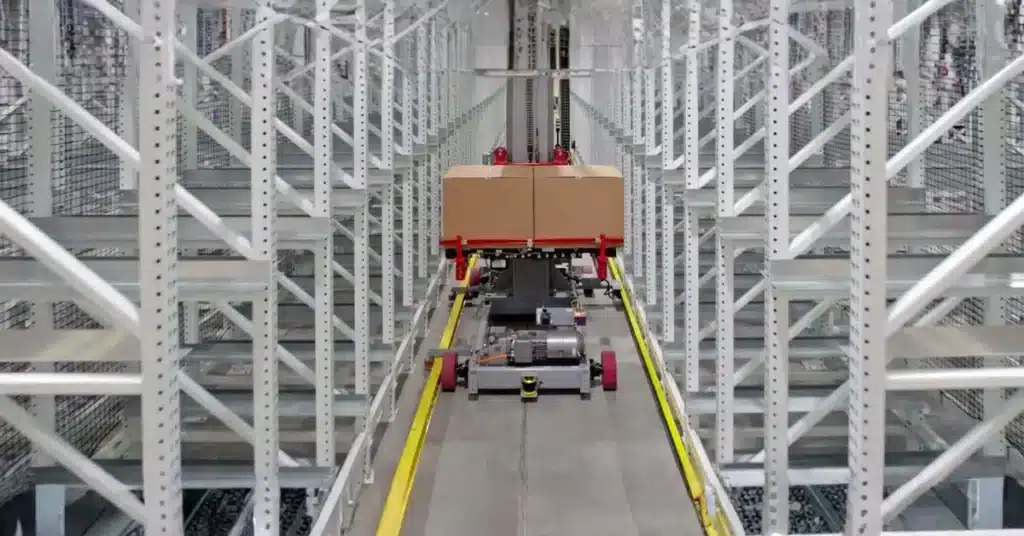
- ASRS technology to maximize storage density and retrieval speed.
- Autonomous Mobile Robots (AMRs) for flexible, efficient movement.
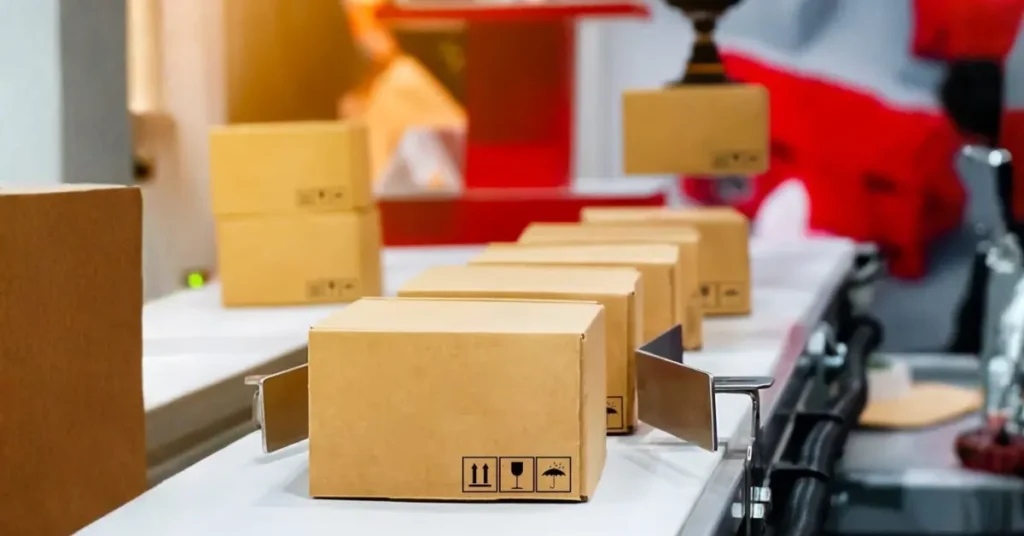
- Conveyor and sortation systems to handle surges without bottlenecks.
- Packaging automation to eliminate dock slowdowns.
- Integrated software solutions to unify online and offline order streams.
- Continuous ROI measurement to ensure technology investments deliver quickly.
This isn’t hypothetical. We’ve seen clients weather holiday peaks without missing SLAs by leveraging automation, intelligent order routing, and last-mile optimization.
“Automation isn’t optional anymore. It’s the backbone of agility. Retailers who’ve invested in it will thrive this holiday, while others scramble just to keep up,” says Ed Romaine, VP of Marketing and Business Development at ISD – Integrated Systems Design.
The Consumer Mindset: Cautious, Calculated, and Craving Value
The statistics for holiday shopping and fulfillment report reveal a consumer base that is stretched but not frozen. More than half (53%) say they haven’t changed their spending habits, but over a quarter say they can no longer spend on anything beyond necessities.
What this means for fulfillment is nuance. Shoppers are still buying, but they’re more selective. They want promotions that feel personalized, bundles that feel smart, and delivery experiences that feel effortless.
This is where automation and personalization intersect. Retailers who can leverage data to predict demand, optimize stock placement, and customize promotions will see disproportionate wins.
Winning in 2025: Precision, Empathy, and Execution
If holiday 2025 could be summed up in one phrase, it’s this: win the moment, or miss the season.
To succeed, retailers and fulfillment partners must:
- Be agile: Daily adjustments to promotions, labor, and fulfillment priorities are essential.
- Mirror digital and physical experiences: Consumers toggle between channels fluidly. Your operations must too.
- Prioritize mobile and BNPL: With over half of online sales coming from mobile, seamless checkout is non-negotiable.
- Deliver on fulfillment promises: From BOPIS (buy online and pick up in store) to same-day, execution will define loyalty.
And most importantly, they must recognize that operational excellence is now a marketing tool. Fast, accurate, reliable fulfillment is the brand promise in action.
“Holiday success in 2025 isn’t about who sells the most—it’s about who fulfills the best. Execution is brand loyalty; the Statistics for Holiday Shopping and Fulfillment speak for themselves,” says Ed Romaine, VP Marketing and Business Development at ISD – Integrated Systems Design
At Integrated Systems Design (ISD), we help companies transform warehouses, distribution centers, and manufacturing and assembly operations into engines of efficiency and growth. As a systems integrator and OEM provider of the UltraStore Mid-Load ASRS, we deliver ROI based automation solutions built on your needs and our proprietary OptimalOps-Process—an eight-step framework designed to optimize picking, sorting, packing, shipping, and assembly.
At ISD, we don’t just sell technology – we partner with you to clearly define your objectives, analyze data, and create tailored solutions that align with your business KPIs and business goals. From conveyors, robotics, and ASRS to AMRs, sortation systems, order fulfillment, and packaging automation, we provide the tools and expertise to maximize ROI and future-proof your operations.
We welcome your questions. For more information, visit www.isddd.com or better yet, schedule a no-obligation consult to discuss your specific concerns and needs.