Considering an automated storage and retrieval system (AS RS) for your materials handling operation?
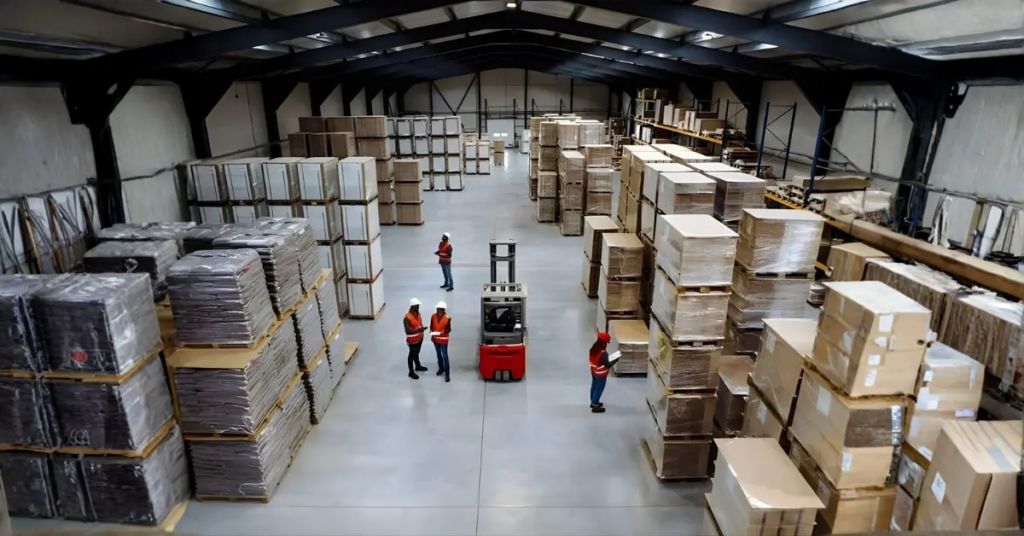
AS RS, Automated storage and retrieval systems, are one of the most established warehouse automation solutions available today. These systems are designed to improve warehouse operations by automating how inventory is stored and retrieved, helping distribution centers and manufacturers keep up with growing demand while managing labor and space constraints.
AS RS solutions offer five primary benefits for warehouse operations:
- Streamline inventory management and inventory control
- Improve throughput and support fluctuating order fulfillment volumes
- Reduce hiring challenges and dependence on manual labor
- Lower labor costs over the long term
- Maximize available floor space and vertical storage capacity
There are many types of ASRS automated storage and retrieval systems available, and reviewing the options can feel overwhelming. This guide walks through:
- Different kinds of automated storage and retrieval systems
- What each type is best suited for
- How AS RS technology works alongside warehouse management systems
- When an AS RS solution becomes financially viable
- Real-world examples of AS RS in warehouse and distribution center environments
- How to decide whether AS RS is right for your operation
By the end, you will understand what the current AS RS landscape can do, which automation options fit your warehouse operations, and what your next steps should be.
Ready to get started?
Different Kinds of AS RS Automated Storage and Retrieval Systems
- Unit load AS RS
- Mini load AS RS
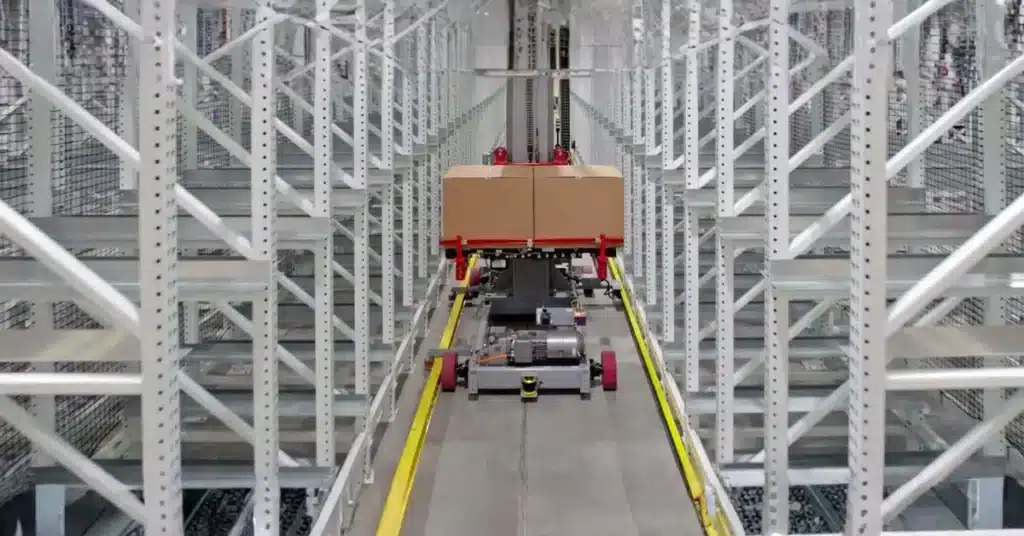
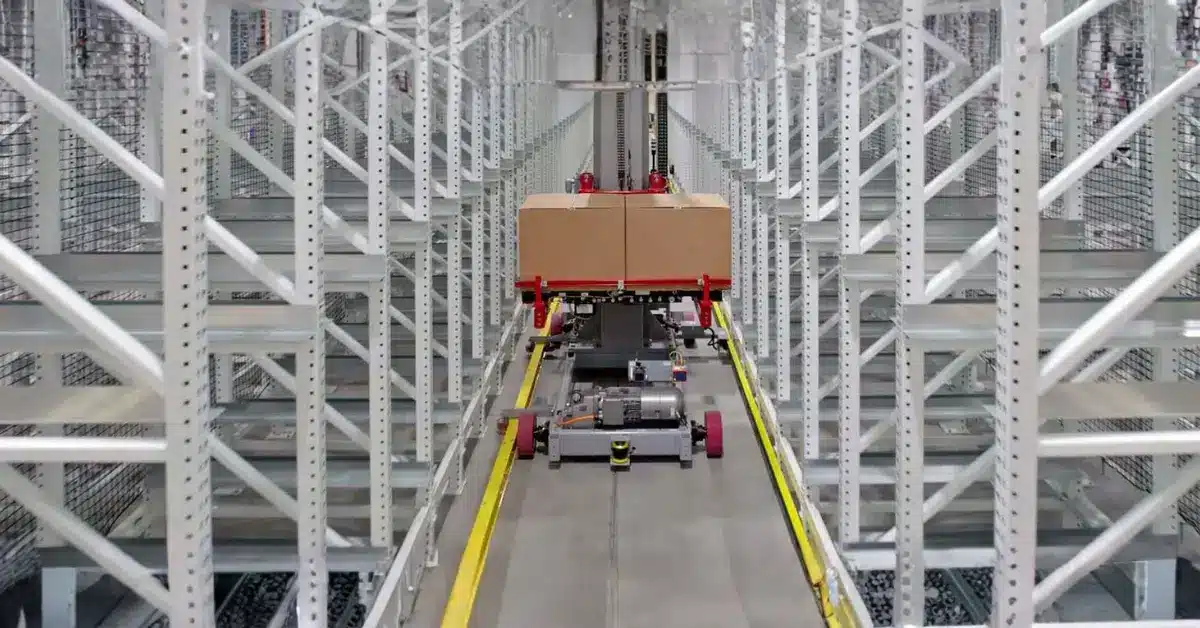
- Tote shuttle and pallet shuttle AS RS
- Horizontal and vertical carousel AS RS
- Vertical lift module (VLM) AS RS
What are Automated Storage and Retrieval Systems?
When someone says “AS RS,” they are not referring to one specific technology. It is similar to saying “transportation.” The requirements for moving a single package are very different from moving hundreds of pallets per hour.
AS RS stands for automated storage and retrieval system. It is a type of automated system that transports, stores, and retrieves materials within a warehouse or distribution center.
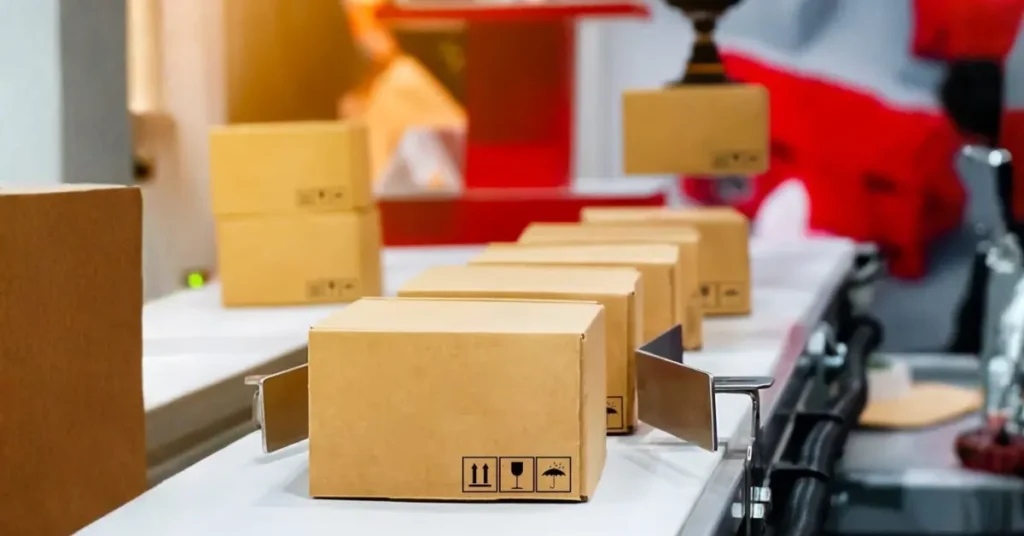
An automated storage and retrieval system combines software such as warehouse management systems and execution controls with material handling equipment like conveyors, cranes, shuttle systems, and robots. Together, these components allow inventory to be stored and retrieved efficiently to support order picking, order fulfillment, and buffering processes.
How an AS RS is designed depends on several factors, including:
- Item type and dimensions
- Item quantity and storage requirements
- Weight of products
- Velocity and order frequency
- Available warehouse space
- Picking and putaway workflows
Most of these solutions fall into two broad categories: unit load for larger loads such as pallets, and mini load for smaller items such as totes or cases.
Unit Load AS RS
Unit load AS RS systems use narrow aisle racking and cranes to store and retrieve full pallets in high-density vertical storage. These systems are commonly used in large distribution centers and manufacturing environments where maximizing storage capacity is critical.
There are two primary subtypes of unit load AS RS:
Fixed aisle systems
These systems use a crane that operates within a single aisle, moving horizontally and vertically to store and retrieve pallets.
Moveable aisle systems
These systems use cranes that can move between aisles, allowing inventory to be stored and retrieved across multiple storage lanes.
Unit load AS RS solutions are often implemented by automated storage and retrieval system companies specializing in high-throughput warehouse automation projects.
Mini Load AS RS
Mini load AS RS systems are designed to store and retrieve smaller loads such as totes, trays, or cases. While they operate similarly to unit load systems, they carry less weight and are optimized for higher SKU counts.
These systems are ideal for warehouse operations with frequent order picking, particularly in environments such as eCommerce, spare parts distribution, and omnichannel fulfillment.
Tote Shuttle and Pallet Shuttle AS RS
Tote shuttle and pallet shuttle systems are commonly used in goods-to-person environments. Shuttles travel independently along rails to retrieve inventory and deliver it to a fixed pick or pack station.
These automated storage and retrieval systems are well suited for high-throughput operations and are often combined with other automated systems such as conveyors, AMRs, AGVs, and forklifts. Shuttle systems are considered cost effective for operations that require flexibility and scalability.
Horizontal and Vertical Carousels
Carousel systems store items in bins that rotate to a pick position. Horizontal carousels move inventory side to side, while vertical carousels move inventory up and down.
Vertical carousel systems are frequently used when floor space is limited and vertical space can be leveraged. These systems help optimize space and improve ergonomics for warehouse workers handling smaller items.
Vertical Lift Module (VLM)
Vertical lift modules VLMs store trays between two vertical columns and use an inserter to retrieve and deliver trays to an operator. After picking is complete, the tray is returned to its storage location.
VLMs are best suited for high-density storage applications where space utilization and storage capacity are top priorities. They allow inventory to be stored and retrieved efficiently while minimizing the footprint of the automated system.
When Is the Cost of an AS RS Solution Financially Viable?
Not every warehouse needs an AS RS. The automated storage and retrieval system cost varies depending on system type, throughput requirements, and facility constraints. However, AS/RS solutions tend to make financial sense when several of the following conditions apply.
- Your operation runs two or three shifts
- Automated systems can operate for 16 or 24 hours per day without overtime, accelerating return on investment.
- You have six or more people performing materials handling
- AS/RS reduces the need for manual processes and labor-intensive handling tasks.
- Labor costs are high or hiring is difficult
- In competitive labor markets, AS RS reduces reliance on hard-to-hire warehouse workers.
- You work with high-velocity items
- AS/RS is most effective when inventory is stored and retrieved frequently, supporting fast order fulfillment.
- You have unused vertical space
- AS/RS allows operations to optimize space by building upward rather than expanding floor space or relocating facilities.
Examples of Automated Storage and Retrieval Systems in Warehouses
Automated Storage and Retrieval Systems are used across a wide range of industries and warehouse operations.
- A manufacturer of automotive seats implemented a three-lane AS RS to store and retrieve finished products, achieving a throughput of 290 pallets per hour.
- A large distribution center used a goods-to-person AS RS to process 30,000 items per eight-hour shift, supplementing human labor with automated systems.
- A manufacturer of cleaning products installed 15 stacker cranes to support storage for more than 160,000 pallets.
- A beauty company distribution center built four vertical storage levels with over 40,000 storage locations, expanding capacity within a limited footprint.
“You really have to start by doing an analysis of an operation and understanding a customer’s needs,” says Tony Morgott, ISD’s VP of Sales. “Some operations need pallet AS/RS, others need to store and retrieve small items. Some need dense storage, while others move fast and need to keep product flowing.”
Because AS/RS can be customized to space, velocity, and inventory requirements, it can be applied across many warehouse and distribution center environments.
Deciding If AS RS Is Right for You
Determining whether AS RS is the right solution starts with a detailed needs assessment. That includes understanding:
- The type of inventory being stored
- Order velocity and throughput requirements
- Number of shifts currently in operation
- Available floor space and vertical clearance
At the end of the day, an automated storage and retrieval system offers a more reliable and repeatable way to move goods than relying solely on manual labor.
If reducing variability and improving consistency in order fulfillment is a priority, AS RS can help.
Research from MIT’s Sloan School of Management and Department of Mechanical Engineering found that the largest source of shipping delays in a distribution center is variability in task completion time. Their recommendation was to adopt AS RS to reduce material processing time and support direct-to-consumer deliveries.
Their findings showed that AS RS implementations reduced storage and retrieval processing time by 67 percent and total processing time by 37 percent. While the cost of an automated storage and retrieval system varies, their research projected a payback period of four to five years.
Many ISD customers have achieved even faster returns.
Meet with us and tell us about your operation and what you are trying to accomplish. We will tell you honestly, and without charge, whether AS/RS makes sense for your warehouse.
If AS/RS is right for you, we will work together to engineer the ideal solution to help you meet and exceed customer expectations.
If it is not, we will help you identify a better-fit approach.