
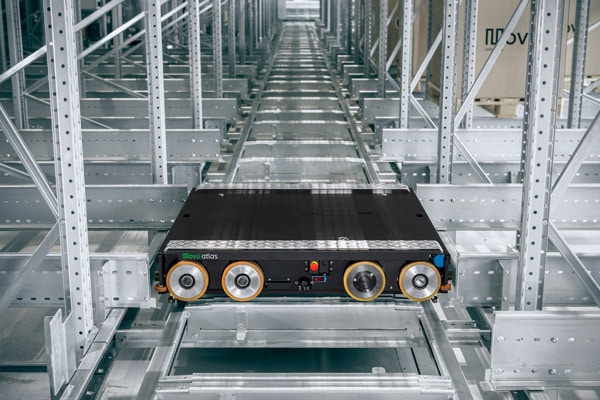
The evolution of warehouse automation has yielded numerous innovative solutions, with Pallet Shuttle systems standing out as one of the most versatile and efficient technologies for high-density storage. These sophisticated systems strike the perfect balance between automation and flexibility, enabling organizations to significantly increase storage capacity while also maintaining efficiency and cost-effectiveness.
Pallet Shuttle technology addresses the growing need for maximized storage density in an era where your warehouse space comes at a premium. By utilizing automated shuttles that operate within specially designed racking structures, these systems can achieve storage densities that far exceed traditional racking while providing faster throughput than conventional drive-in or push-back systems.
The intelligent design of Pallet Shuttle systems makes them particularly attractive to organizations seeking to optimize their storage operations without the substantial investment required for larger ASRS installations.
Modern Pallet Shuttle installations incorporate advanced control systems, sophisticated software integration, and precise mechanical engineering to create reliable and efficient storage solutions in demanding warehouse environments. From food and beverage distribution to automotive parts storage, Pallet Shuttle technology is transforming how organizations approach high-volume storage challenges.
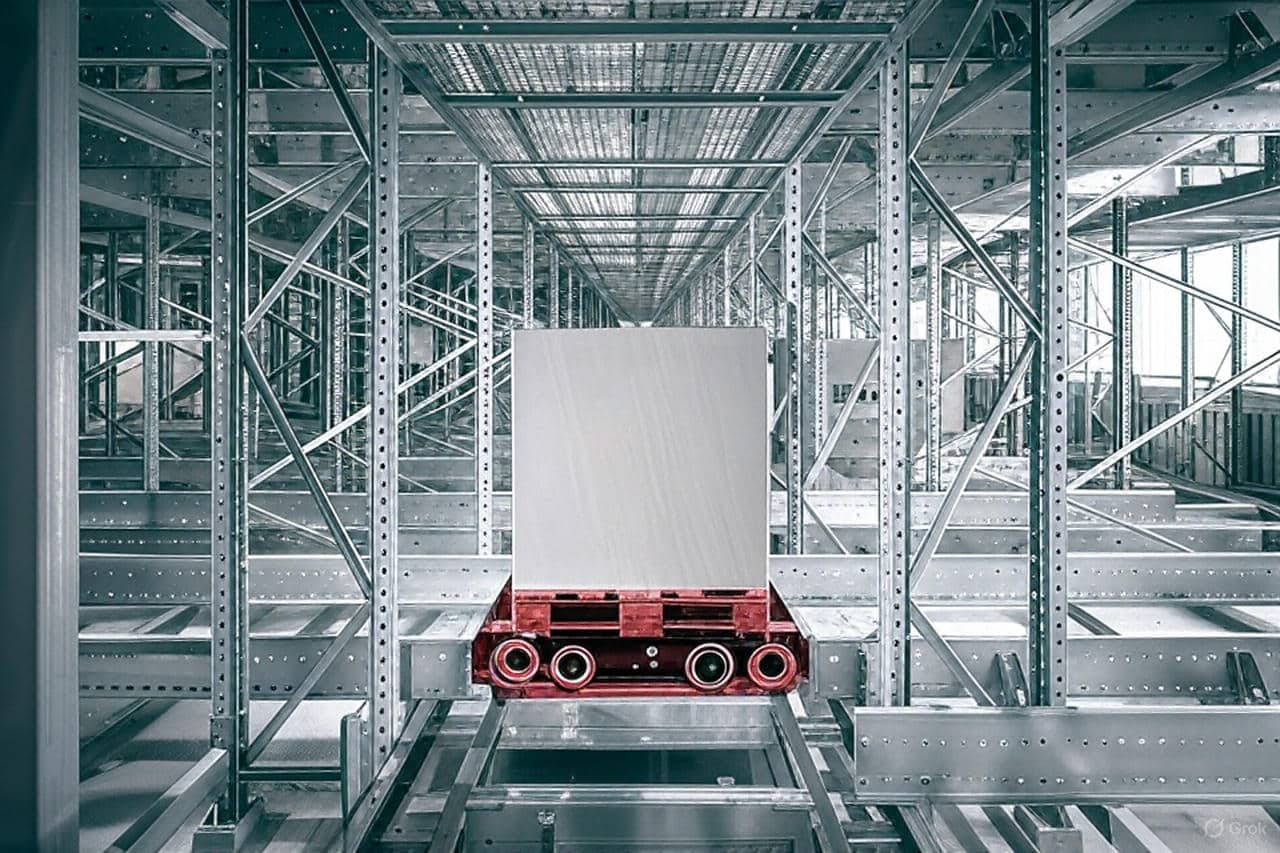
A Pallet Shuttle system consists of automated shuttles that travel on rails within deep-lane racking structures, automatically transporting pallets to and from storage positions without requiring forklifts to enter the storage lanes. This innovative approach combines storage density advantages of drive-in racking with the operational efficiency of automated material handling.
This system operates through radio-controlled shuttles that receive commands from operators using handheld remote controls or integrated WMS (warehouse management systems) or WES (warehouse execution systems). These battery-powered shuttles travel along rails installed within the racking structure, capable of lifting, transporting, and precisely positioning pallets throughout the storage lanes.
Using a Pallet Shuttle system begins with proper lane configuration based on product characteristics, order profiles, and inventory management requirements. Each lane can be dedicated to specific SKUs or configured for mixed storage depending on operational needs. Shuttle cars are positioned within designated lanes using standard forklifts, which then remain outside the racking structure for safety and efficiency or by using integrated lifts or elevators which transport the shuttles to the required level.
Storage operations commence when the software directs the shuttles to specific positions within the lanes. The shuttles automatically lift pallets from their transport position and move them deeper into the storage lane, creating a first-in-first-out (FIFO) or last-in-first-out (LIFO) storage pattern based on operational requirements.
Retrieval operations follow a similar process, with software controlling shuttles to access specific pallets and transporting them to the lane entrance where forklifts can safely retrieve them or lifts deliver them to the proper level. The shuttles navigate automatically within the lanes, using sensors and positioning systems to ensure precise pallet placement and safe operation.
The system’s flexibility allows for easy reconfiguration as product mixes change or seasonal demands fluctuate. Shuttles can be relocated between lanes quickly, and the racking structure can accommodate various pallet sizes and weights without major modifications.
Pallet Shuttle systems incorporate sophisticated engineering and advanced technological components that work together to deliver reliable, efficient automated storage operations. Understanding these key features helps organizations appreciate the system’s capabilities and make informed implementation decisions.
The shuttles represent the core technology component, featuring dynamic construction designed to manage heavy loads while operating continuously in demanding warehouse environments. These units incorporate precision positioning systems, load handling mechanisms, and safety sensors enabling autonomous operation within the racking structure.
This racking system provides the structural foundation for shuttle operations, engineered to precise tolerances that ensure smooth shuttle movement while supporting substantial load weights. These structures incorporate guide rails, positioning markers, and safety features that facilitate automated operations while maintaining structural integrity.
Control systems coordinate all aspects of shuttle operation through sophisticated software that manages positioning, load handling, and communication with warehouse management systems. These systems provide real-time operational visibility while optimizing shuttle movements for maximum efficiency.
Communication enables seamless interaction between operators, shuttles, and warehouse management systems through radio frequency and wireless networking. This connectivity ensures coordinated operations while providing comprehensive operational data.
Safety systems are integrated throughout Pallet Shuttle installations, including emergency stop capabilities, collision avoidance sensors, and automated safety checks, ensuring safe operation in dynamic warehouse environments.
Battery management systems optimize shuttle car performance through intelligent charging protocols, predictive maintenance alerts, and power management features that maximize operational availability while minimizing energy consumption.
Customer satisfaction improves significantly through enhanced order fulfillment capabilities and inventory accuracy. Faster throughput and better inventory control enable organizations to meet customer commitments more consistently while reducing order errors and shipping delays.
Financial performance benefits from reduced operational costs, increased storage capacity, and improved asset utilization. Organizations typically achieve substantial cost savings through reduced labor requirements, lower facility costs per pallet stored, and decreased product damage rates.
Operational flexibility increases dramatically as Pallet Shuttle systems adapt easily to changing business requirements. Organizations can modify storage configurations, adjust to seasonal variations, and accommodate new products without major infrastructure investments.
Risk management improves through enhanced workplace safety, reduced dependency on specialized labor, and more predictable operational performance. Organizations become more resilient to external challenges while maintaining consistent service levels.
Strategic advantages emerge through improved operational efficiency and cost competitiveness. Organizations can offer better service levels, respond more quickly to market changes, and allocate resources more effectively to growth initiatives.
Data-driven decision making becomes possible through comprehensive operational analytics and real-time visibility. Organizations gain insights into operational patterns, inventory trends, and performance metrics that support strategic planning and continuous improvement initiatives.
Pallet Shuttle systems deliver comprehensive operational improvements that transform warehouse efficiency while providing excellent return on investment. These benefits extend beyond simple automation, creating strategic advantages that enhance competitiveness and operational resilience.
The implementation of Pallet Shuttle technology provides numerous measurable benefits:
Pallet Shuttle technology demonstrates remarkable versatility across diverse storage scenarios, making it an ideal solution for organizations with varying operational requirements and storage challenges. Likewise, the system’s adaptability enables it to address specific industry needs while delivering consistent performance improvements.
The broad range of applications for Pallet Shuttle systems includes:
Pallet Shuttle technology proves valuable across a multitude of industries; each leveraging the system’s unique capabilities to address specific operational challenges and achieve industry-specific objectives. The technology’s proven performance spans diverse sectors, demonstrating broad applicability and consistent value delivery.
Industries experiencing significant benefits from Pallet Shuttle implementation include:
Successful Pallet Shuttle implementation requires careful evaluation of multiple factors that influence system design, performance, and long-term value. Organizations must assess their specific operational requirements, facility constraints, and strategic objectives to ensure optimal system configuration.
Product characteristics significantly impact system design decisions, including pallet dimensions, weight ranges, product stability, and handling requirements. Understanding your organization’s current and predicted product profiles ensures relevant system specifications for present and long-term adaptability.
Inventory management practices influence lane configuration and shuttle deployment strategies. Organizations must consider storage patterns, rotation requirements, and access frequencies to refine system layout and operational procedures.
Facility characteristics affect system implementation, including ceiling heights, floor conditions, structural capacity, and available space for equipment installation. These factors determine feasible system configurations and may require facility modifications.
Throughput requirements drive system sizing decisions, including the number of shuttles needed, lane configurations, and integration with material handling equipment. Peak demand periods and seasonal variations must be considered in capacity planning.
Integration requirements with existing systems need thorough evaluation, including warehouse management software, inventory control systems, and material handling equipment. Seamless integration ensures best performance and operational continuity.
Operational procedures must be developed to maximize system benefits while ensuring safe, efficient operation. This includes operator training, maintenance procedures, and emergency protocols that support reliable system performance.
Budget considerations encompass initial investment, ongoing operational costs, and expected return on investment (ROI). Comprehensive financial analysis helps determine right system scope and implementation timing.
Modern Pallet Shuttle systems offer extensive customization options and accessories that enable organizations to tailor installations to specific operational requirements while providing flexibility for future expansion and adaptation. These options enhance system capabilities and operational efficiency.
Available options and accessories for Pallet Shuttle systems include:
All specifications are nominal and subject to change without notice
These specifications are typical ranges for Pallet Shuttle systems, with actual performance dependent on specific manufacturer capabilities, application requirements, and system configuration. Organizations should work with experienced integrators to determine optimal specifications for their particular applications.
The continued evolution of Pallet Shuttle technology incorporates emerging innovations in artificial intelligence, connectivity, and automation that promise to enhance system capabilities while reducing operational complexity and costs.
Artificial intelligence integration is enabling more sophisticated operational optimization, including predictive maintenance capabilities, automated load balancing, and intelligent route optimization that maximizes shuttle efficiency while minimizing energy consumption.
Enhanced connectivity through IoT integration provides unprecedented visibility into system operations, enabling real-time performance monitoring, remote diagnostics, and predictive analytics that optimize operational efficiency and prevent unexpected downtime.
Advanced sensor technology is improving positioning accuracy, load detection capabilities, and safety systems while enabling more sophisticated operational features such as automated inventory verification and dynamic load optimization.
Sustainable technology initiatives are driving development of more energy-efficient shuttles with longer battery life, faster charging capabilities, and reduced environmental impact through optimized power management and recyclable component materials.
Integration with autonomous mobile robots (AMRs) and other automated systems is expanding Pallet Shuttle capabilities beyond traditional storage applications, enabling comprehensive automated material handling solutions that span entire warehouse operations.
Cloud-based control systems are becoming more prevalent, offering enhanced scalability, remote management capabilities, and easier integration with enterprise software systems while reducing on-site IT infrastructure requirements.
ISD -Integrated Systems Design stands as a premier choice for Pallet Shuttle implementation, bringing extensive expertise and proven experience to every project. As a leading systems integrator specializing in warehouse, distribution, assembly, and manufacturing operations, ISD possesses the comprehensive knowledge required for successful Pallet Shuttle deployment.
ISD’s proprietary OptimalOps-Process™ features an 8-step framework designed to work collectively to enhance operational efficiency, reduce costs, expedite ROI, and help future-proof operations by optimizing picking, sorting, packing, and shipping processes. This systematic approach ensures thorough planning and execution for Pallet Shuttle implementations.
The company’s collaborative approach sets ISD apart in the integration marketplace. ISD partners closely with clients to clearly define objectives, conduct comprehensive data analyses, and implement strategic planning. This partnership approach enables the creation of high-performance, tailored Pallet Shuttle solutions that align with and elevate operational and business KPIs.
ISD’s extensive offerings encompass a wide array of best practices and advanced technologies, including Conveyor Systems, Automated Storage and Retrieval Systems (ASRS), Autonomous Mobile Robots (AMRs), Robotics, Sortation Systems, Warehouse Software, Pallet Handling, and Packaging Automation. This comprehensive capability ensures seamless integration of Pallet Shuttle systems with existing and planned automation technologies.
With OptimalOps-Process, ISD provides customized Pallet Shuttle solutions that meet the unique needs of each client, maximizing ROI and operational effectiveness. The company’s history of successful implementations across diverse industries demonstrates their ability to deliver results that exceed client expectations.
Partnering with ISD streamlines Pallet Shuttle implementation processes and drives growth through intelligent automated solutions. Their commitment to excellence and customer success makes them the ideal choice for organizations seeking to leverage Pallet Shuttle technology for competitive advantage.
A single shuttle can typically handle 25-40 pallet movements per hour depending on lane depth, pallet weight, and operational configuration. Multiple shuttles can operate simultaneously to increase throughput.
Modern shuttle cars operate for 8-16 hours on a single charge depending on usage intensity and load weights. Fast-charging capabilities allow quick battery replenishment during breaks or shift changes.
Yes, most shuttle systems can accommodate various standard pallet sizes within their design parameters. Some systems can handle multiple pallet sizes simultaneously with appropriate configuration adjustments.
Shuttles can be programmed for FIFO operation by retrieving pallets from the opposite end of storage lanes from where new pallets are placed, ensuring proper inventory rotation.
Most systems include manual override capabilities and backup procedures for shuttle retrieval. Some installations include redundant shuttles or manual retrieval equipment for emergency situations.
Basic shuttle operation typically requires 1-2 days of training. Advanced troubleshooting and maintenance procedures may require additional specialized training depending on system complexity.
Yes, specialized shuttle cars are available for operation in frozen storage environments down to -30°C (-22°F) with appropriate cold-weather components and battery systems.
Modern shuttle systems utilize standard communication protocols that enable seamless integration with most WMS platforms for inventory tracking and operational control.
Understanding existing performance metrics helps determine appropriate shuttle system configuration and the number of lanes needed to meet operational objectives.
Product characteristics including pallet types, weights, dimensions, and stability requirements directly influence shuttle specifications and system design.
Current inventory management practices help determine optimal lane configuration and shuttle programming for FIFO, LIFO, or mixed storage patterns.
Physical facility limitations determine feasible system configurations and may influence the number of levels and lane depths that can be implemented.
Integration requirements with forklifts, conveyor systems, and other equipment impact system design and operational procedures.
Understanding demand patterns helps determine shuttle capacity requirements and operational planning for varying workload levels.
Budget parameters help determine appropriate system scope, shuttle quantities, and operational features while ensuring sustainable operational costs.
Staffing considerations impact training requirements, maintenance planning, and ongoing operational support needs.
Future growth projections help ensure system scalability and determine whether additional lanes or shuttles can be added later.
Automation requirements influence control system complexity, integration needs, and the level of manual oversight required for operations.
Contact Us for More Information About Pallet Shuttle ASRS